Burger King Calorie Menu
You’re about to get a practical, U.S.-focused guide to ordering with confidence. This short intro shows how to use nutrition info as a starting point and then adjust based on local availability.
Use the listed calories and facts to make quick swaps at the drive-thru. Think hamburger versus cheeseburger, nugget and sauce choices, Whopper family swaps, and lighter dessert picks.
Remember that calories aren’t the only number that matters. Sodium, toppings, and drinks can change totals a lot. Also watch for franchise variation, shared fryers, and out-of-date charts on the website or printed sheets.
This guide stays friendly and practical for families and travelers. You’ll get simple swaps that still feel like fast food. Ask at the counter for real-time availability and ingredient details when you need to be sure.
What to Know Before You Use the Burger King Menu Nutrition Info
Not every PDF or screenshot reflects current restaurant practices—here’s how to verify. Online content can be reposted, outdated, or never sanctioned by the company. That makes relying on a random chart risky when you plan around allergens or swaps.
Why charts online can be out of date
Google sometimes surfaces old allergen charts. Check the date on any nutrition or allergen file before trusting it. Then compare that date to the Burger King app or official site and ask in-store if you see differences.
Restaurant-to-restaurant variation in the U.S.
Franchise ownership, suppliers, and kitchen routines change across towns. Portions and ingredient builds can differ between restaurants. That affects what you actually get and how you order.
Shared fryer note and milk allergy reminder
Fried items often share oil. Burger King uses shared fryers; oils may include corn, canola, soy, and cottonseed. Cross-contact can matter more than calories for some diets.
| Check | Where to look | Why it matters |
|---|---|---|
| Date stamp | PDF or web page | Old files mean wrong info |
| App/website | Official listings | Most current ingredients |
| Ask staff | In-store/manager | Confirm cross-contact (milk) risks |
Burger King Calorie Menu: Best Picks When You’re Watching Calories
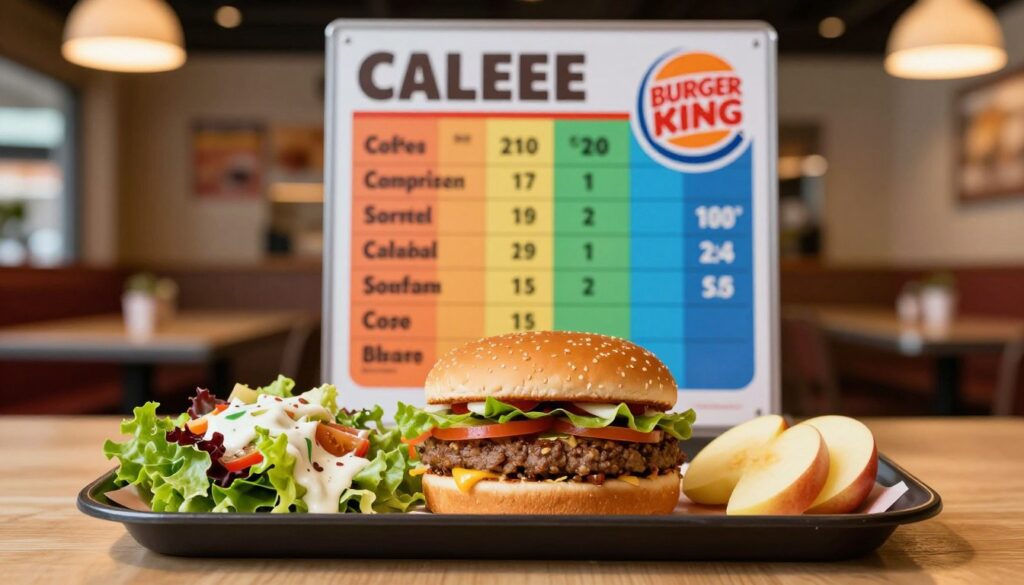
If you want lower-calorie picks that still feel like comfort food, this list helps you order with less guesswork.
- French toast sticks (3-piece): 340 calories, 210 mg sodium.
- Hash browns: 270 calories.
- Plain hamburger: 250 calories, 560 mg sodium.
French toast sticks and breakfast swaps
Toast sticks work as a calmer breakfast option. They feel like a treat and travel well on road trips.
They are fried and may share fryers with other items. That matters if you avoid milk cross-contact.
Hash browns, burgers, nuggets, and treats
Make hash browns more filling by pairing them with a higher-protein item or an unsweetened drink to keep calories focused on food.
Cheeseburger adds just over 40 calories and raises sodium to about 780 mg, so you trade a bit of flavor and protein for higher numbers.
Chicken nuggets (4-piece) are 190 calories. Ask for dipping sauce on the side and use half. Lighter sauce choices (mustard-style or BBQ) cost fewer calories than creamy options.
| Item | Calories | Notes |
|---|---|---|
| French toast sticks (3 pc) | 340 | 210 mg sodium; fried |
| Hash browns | 270 | Pair with protein for a fuller meal |
| Plain hamburger | 250 | 560 mg sodium; add cheese ≈ +40 cal |
| 4-piece chicken nuggets | 190 | 490 mg sodium; sauce affects total |
| Soft-serve cone | 200 | Cup is ~20 cal less; cookies sold in pairs (160 cal each) |
Smarter Breakfast Orders That Still Feel Like Fast Food
A few smart swaps at the counter keep your morning favorites tasting like comfort food without the surprise sodium or sugar.
Croissan’wich trade-offs: protein vs. sodium
The ham, egg, and cheese Croissan’wich is about 350 calories and roughly 1,000 mg sodium. It gives solid protein but raises sodium quickly.
If sodium matters, skip the ham or ask for no cheese to cut both salt and fat. Swapping to a plain egg or choosing a different bun-style item lowers totals without losing the familiar bite.
Drinks that can quietly add calories
Specialty coffee and sweetened drinks add calories fast. A flavored creamer or syrup can cost more than changing your sandwich.
Pick water, black coffee, or unsweetened tea as your default. Note: non-dairy milk for coffee drinks is not offered at most U.S. locations, so dairy-free diners should be cautious.
| Choice | Typical calories | Why it matters |
|---|---|---|
| Ham, egg & cheese Croissan’wich | 350 | High sodium (~1,000 mg) despite moderate calories |
| Swap: egg-only or no cheese | ~250–300 | Lower sodium and fat; keeps protein |
| Drink: water or black coffee | 0–5 | Avoids sweetener calories and keeps meal predictable |
Traveler tip: choose one treat — the sandwich or a sweet drink — not both. Small changes keep your morning simple and closer to your daily diet goals.
Burgers and the Whopper Family: Calorie-Savvy Swaps
You can keep the flame-grilled feel and still shave off calories with a few focused tweaks.
Think smaller builds, simpler sauces, and fewer toppings. Those choices usually trim numbers more than trying to “diet” a fully loaded sandwich.
Whopper Jr. as a lighter, lower-sodium-style choice
The Whopper Jr. gives the same profile with a smaller patty and lower sodium. It lists about 330 mg sodium before sauces and sides. For a lighter feel, choose the Jr. and skip extra sauce.
Ordering “no cheese” on bacon and BBQ builds
Asking for no cheese is an easy cut. You keep the bacon flavor and the bun, while shaving fat and calories. Many builds—Bacon King, BBQ Bacon Whopper Jr., or the Maple Bourbon BBQ Whopper—are often customizable this way.
Impossible Whopper notes for cutting animal products or calories
The Impossible Whopper is a good plant-based option. It still gains calories fast with mayo, cheese, or heavy sauces. For a vegan or lower-calorie order, skip mayo and cheese.
| Item | Approx. Calories | Approx. Sodium | Quick Tip |
|---|---|---|---|
| Whopper Jr. | ~310 | 330 mg | Skip extra sauce; choose smaller side |
| Bacon King (no cheese) | ~900 (no cheese) | high | No cheese keeps bacon flavor, cuts fat |
| BBQ Bacon Whopper Jr. | ~420 | moderate | Order no cheese to lower totals |
| Impossible Whopper (no mayo) | ~630 | moderate | Good plant option; hold mayo for vegan |
Family order tip: pick one main sandwich you’ll enjoy and share a lighter side. For a simple plan, use this family order framework to keep totals reasonable: one full treat, one shared side, and water or unsweetened tea. Learn more about balanced swaps here: family order framework.
Chicken, Fish, and Nuggets: Comparing Popular Sandwiches and Items
Choosing between chicken fries, nuggets, or a fish sandwich comes down to portion, sauce, and how full you’ll feel. Look beyond calories to think about dipping habits and how “snackable” shapes change what you eat.
Chicken fries vs. chicken nuggets: what to consider
Chicken fries feel easy to overeat. Their shape invites extra dips and seconds. Chicken nuggets (4-piece) are a clear anchor: 190 calories and about 490 mg sodium. Use that as your reference when pairing a side.
Big Fish as an alternative
The Big Fish sandwich offers a change of pace from meat sandwiches. Tartar-style sauces and thicker sides can raise totals fast. If you want a different flavor, pick the fish but keep sauces light.
Heads-up on milk in some U.S. chicken patties
Important allergen note: some U.S. chicken patties—like the Royal Crispy and the Original chicken sandwich patty—contain milk. Always confirm the exact patty at the restaurant before ordering if you avoid dairy.
| Item | Typical Calories | Notes |
|---|---|---|
| 4-piece chicken nuggets | 190 | Good snack or light pairing |
| Chicken fries | Varies | Easy to add sauces; portion control matters |
| Big Fish sandwich | Moderate | Watch tartar and side choices |
Choose your lane: pick a sandwich meal or a nugget-style snack. Then keep sauces and sides intentional so calories don’t sneak up on you while traveling between restaurants.
Sides, Fries, and Rings: Where Calories and Sodium Add Up Fast
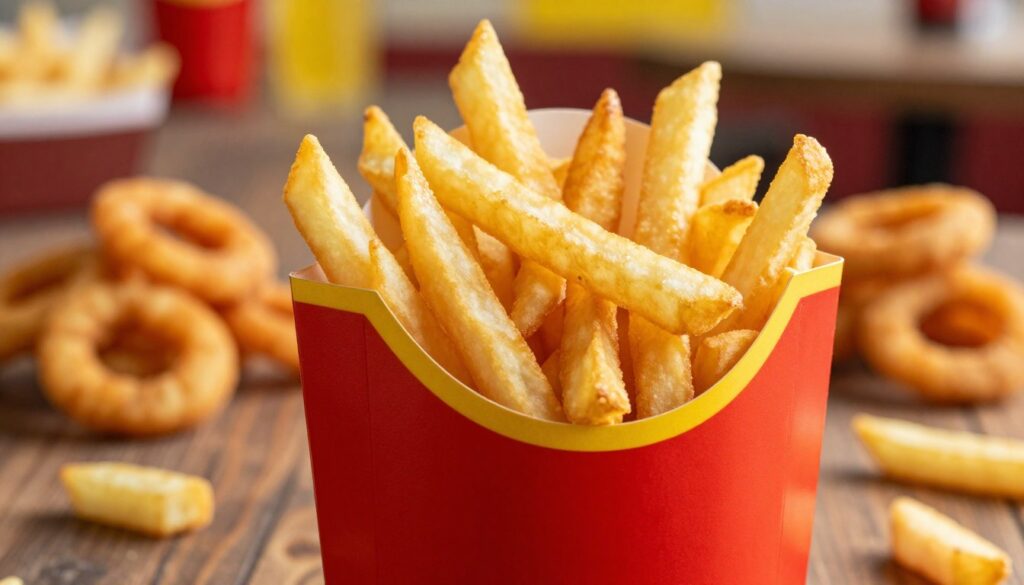
A single side can push a modest sandwich into a high-calorie meal before you blink. Sides are the most common way totals climb. That matters when you want a lighter plate but still want a treat.
Fries and Have-sies: common add-ons
Fries and Have-sies are the go-to choices. Pick one small order or split a regular portion with a partner or child. Choosing a single fried side keeps calories and sodium lower than adding multiple fried items.
Onion rings: allergy notes and U.S. accuracy
Older or international charts sometimes list milk in onion rings. Current U.S. allergen info shows no milk in the onion rings recipe, and corporate confirmation supports that. Still, shared fryers create cross-contact risk for milk-sensitive guests.
Applesauce as a lighter swap
Mott’s Applesauce is a low-calorie, low-sodium option. It’s a good swap when you want something on the side without the fried hit. For families, try one fried side to share plus applesauce so everyone gets a treat without doubling the calories.
| Side | Approx. calories | Approx. sodium |
|---|---|---|
| French Fries (small) | ~320 | ~300 mg |
| Onion Rings (small) | ~330 | ~360 mg |
| Mott’s Applesauce | ~50 | ~0–5 mg |
One final tip: check current Burger King menu and allergen listings before you order. Nutrition and ingredients change, so verify when sodium or allergies matter most.
Sauces, Condiments, and Drinks That Change the Numbers
Small extras often do more to change your totals than swapping sandwiches.
Think of sauces and condiments as quick multipliers. A creamy mayo-based spread adds fat and calories fast. Aiolis and savory spreads make a sandwich taste richer but raise sodium too.
Ask for sauces on the side. That gives you control and cuts accidental splashes. Use half the dip to save calories and keep flavor without the full hit.
Dipping sauces to watch
- Buffalo contains milk in U.S. locations; watch if you avoid milk.
- Honey Mustard, Zesty, and seasonal Stacker sauces are dairy-free but contain egg.
- Savory Royal Sauce and Peppercorn Aioli are made with milk.
| Sauce | Allergen | Notes |
|---|---|---|
| Buffalo | Milk | Spicy; avoid if dairy-free |
| Honey Mustard / Zesty | Egg | Dairy-free; contain egg |
| Peppercorn Aioli | Milk | Creamy; higher calories |
Drinks, coffee, and small rules
There are no non-dairy milk options for coffee drinks in most U.S. locations. Vanilla and Hershey’s chocolate syrup for mochas do not contain milk. Frozen Coke and flavored drinks can add sugar and calories quickly.
Finally, salt & pepper seasoning or extra sauce requests can spike sodium. Taste first. Ask for portions on the side to keep numbers predictable.
Putting It All Together for Your Next Order
.
Use a short checklist before you pull into the drive-thru. Pick a main, pick a side, decide how to handle sauces, and choose a drink that won’t double your calories.
Try ready-to-order combos: a junior sandwich with applesauce and water; a 4-piece chicken with a shared small fry and sauces on the side; or a fish or chicken sandwich held with no mayo plus an unsweetened tea.
Big wins: go smaller, skip cheese or mayo, and share fries or rings. Remember sodium adds up fast when you add sauces and sides.
If milk or strict allergies matter, confirm ingredients at your location and ask about shared fryers. Use the burger king menu tools (filtered by calories and availability, updated 1/8/2026) to plan ahead.
Enjoy the meal—order with a simple plan and you’ll feel good about your choice on the road.