is taco bell meat gluten free
The main question is simple: can you order seasoned filling at a US chain without risking gluten exposure? This intro explains how the chain labels food and what that means for real-world ordering.
Taco Bell does not label any menu item as gluten free, and their online policy warns of shared prep areas and shared fryers. That creates a cross-contact risk even when ingredients lack gluten.
Think of the safest approach as an ingredient check plus a cross-contact risk check. We will look at the brand’s statements, the recipe notes on seasoned filling and oats, and common spots for exposure in-store.
This article will also note how guidance varies for celiac disease, wheat allergy, and plain gluten sensitivity. For a practical start, see a short guide and tips at Taco Bell gluten guide.
Quick answer: Taco Bell doesn’t claim any food is gluten-free</h2>
In brief, you will not find an official gluten-free menu at this national chain. No item is labeled gluten-free, so any protein or filling cannot be guaranteed safe from cross-contact.
“Made without gluten-containing ingredients” is an ingredient statement. It only means recipes lack listed wheat or related items. It does not promise separate prep areas, dedicated tools, or exclusive fryer oil.
What “made without” means versus truly gluten-free
Truly gluten-free handling usually requires controls that cut trace exposure: separate prep, sealed storage, and dedicated equipment. The brand does not promise those controls for its regular kitchens.
Why this matters for sensitivity, allergy, and disease
- For celiac disease, even tiny traces can cause harm. Therefore this chain is not recommended for people with that disease.
- Customers with non-celiac gluten sensitivity must weigh personal tolerance and risk.
- Wheat allergy adds another layer: wheat can show up via shells, breading, or cross-contact even when an item does not contain gluten ingredients.
Even when labels say an item does not contain gluten, shared equipment can still cause exposure. Next, we’ll review what the company publicly says about its proteins and ingredient notes.
is taco bell meat gluten free</h2>
The brand’s public guidance names proteins that are “made without gluten-containing ingredients,” but it also warns customers about shared prep areas and shared fryer oil.
What the company says on its website
The official allergen and ingredient guide on the taco bell website lists current recipes and an allergen tool to check menu items. Use those pages as the primary source for ingredient facts.
Meats commonly listed as made without gluten ingredients
- Chicken
- Steak
- Bacon
- Sausage crumbles
- Seasoned beef
None of these are certified gluten-free; they are simply shown as items made without listed gluten ingredients. Processed proteins often include seasonings and binders, so read ingredient notes closely.
Seasoned beef and the oats issue
Seasoned beef may contain oats or oat fiber. Oats are prone to cross-contact during harvest and processing, which raises risk for people with celiac disease or high sensitivity.
Choosing a lower-risk protein helps, but the next section will explain how in-restaurant handling can still cause exposure.
Where gluten exposure happens at Taco Bell</h2>

Busy fast-food kitchens create many chances for ingredient transfer during service. That makes label language less useful if handling and tools are shared.
Shared surfaces, utensils, and bins
Cross-contamination occurs when the same prep line, cutting board, or scoop touches different orders. Hands, tongs, and pans can move fine flour or crumbs to otherwise safe items.
In a restaurant rush, bins for toppings and seasonings are used for many orders, increasing exposure risk to wheat and other residues.
Shared fryer oil and why it matters
Many locations cook gluten-containing items and non-gluten items in the same fryer. That common oil can carry small particles across fries, chips, or bowls.
For example, wheat-based cinnamon twists cooked in the same fryer make fried sides higher risk for anyone avoiding wheat in their food.
Flour tortillas and handling points
Flour tortillas are a major wheat source and often touch counters and wrappers. Flour dust spreads fast during busy shifts and can land on proteins or rice.
- Prep lines, utensils, and gloves transfer residue quickly.
- Fryer oil can move wheat proteins to fried sides.
- Flour dust from tortillas is a frequent contact point.
Practical takeaway: even when ingredients list no gluten, the kitchen setup can still make a dish unsafe for strict avoidance. Because cross-contamination is the main concern, use the brand’s allergen tool and ask in-store questions before ordering.
Taco Bell allergen information and how to use it the right way</h2>
Start with the brand’s online allergen hub to confirm what each menu item lists today. Use the official ingredient guide and the menu-level allergen tool on the company website before you order.
How to use the tool the right way:
- Search the taco bell allergen filter for wheat and related items at the menu level.
- Check the main item and every add-on, sauce, and topping — defaults can change ingredients.
- Save a quick note of the listed allergens for your preferred build before you arrive.
Ingredients change with new promotions and supplier updates. Always reconfirm on the website the day you plan to order. Yesterday’s safe pick might not match today’s recipe.
Read the fine print: the chain may list items made without certain allergens but warns about shared prep areas and shared fryer oil. That taco bell claim means the brand does not certify a gluten-free menu and does not recommend products for celiac disease.
| Resource | What to check | Why it matters |
|---|---|---|
| Allergen guide | Full ingredients and allergen flags | Shows recipe-level information and handling notes |
| Menu allergen tool | Filter by wheat and related items | Quickly compares menu items and add-ons |
| In-store questions | Confirm current build and prep handling | Staff can note on-order changes but cannot override policy |
Quick pre-order routine: check the guide online, confirm the menu build, then order with simple customizations. Once you know how to check allergens and ingredients, the next step is choosing protein options that typically pose lower risk.
Meat options: what’s typically safer to choose</h2>
Choosing the right protein can lower ingredient risk when you build a simple order.
Grilled chicken and steak are often shown as made without certain gluten ingredients on the brand’s guide. That makes them typical starting points for cautious diners who want fewer processed seasonings.
Grilled chicken and steak in bowls and tacos
Bowls usually work better than wrapped items because they skip flour tortillas and reduce handled components. A Power Menu bowl with chicken or steak tends to have fewer moving parts.
When protein swaps reduce gluten ingredients but not cross-contamination
Swap seasoned beef for chicken or steak to avoid oats or complex binders in some items. That cut can lower listed gluten ingredients in menu items.
Remember: swaps do not remove cross-contamination risk in shared kitchens. For strict celiac care, these choices are risk reduction, not a guarantee of safety.
- Pick builds with fewer sauces and fried add-ons.
- Ask for simple preparations and minimal handling.
- Choose combos with rice, beans, and plain protein.
| Option | Typical benefit | Limitation |
|---|---|---|
| Grilled chicken | Fewer processed ingredients | Shared prep risk |
| Grilled steak | Simpler seasoning | Not certified safe |
| Seasoned beef | Flavorful default | May contain oats |
Menu items made without gluten ingredients that pair well with meat</h2>
Choose a simple base to limit handled parts and reduce cross-contact risk. Power Menu bowls and Cantina-style bowls offer the best customization because they skip flour wrappers and let you control sauces and toppings.
Power Menu and Cantina-style bowls — best customization potential
Order bowls with grilled chicken or steak and ask to remove avocado ranch, which contains gluten. Pick plain additions like lettuce, cheese, tomato, sour cream, and guacamole to keep ingredients straightforward.
Crunchy tacos with corn shells — what to watch for
Crunchy tacos use corn shells and are listed as made without gluten ingredients in some guides. Still, watch for seasoned beef that may contain oats and for prep near flour tortillas.
Black beans, rice, and black beans + rice as sides
Black beans and rice are commonly shown without gluten ingredients and pair well with grilled protein. They lower complexity and reduce the chance of accidental add-ons.
- Keep it simple: fewer components mean fewer chances for cross-contact.
- Swap seasoned beef for chicken or steak to avoid oat-containing blends.
- Confirm the current ingredient list for taco bell items before ordering.
| Item | Typical benefit | Limitation |
|---|---|---|
| Power Menu bowl | Customizable, no tortilla | Watch sauces |
| Crunchy tacos (corn) | Corn shell avoids flour | Prep-area cross-contact |
| Black beans + rice | Simple, listed without gluten ingredients | Shared utensils risk |
Items to skip if you’re avoiding gluten</h2>
Some menu choices carry much higher risk of cross-contact than others, especially fried and flavored snacks.
Why Doritos Locos can be confusing
Branded names like doritos locos and doritos locos taco sound simple, but packaging and prep differ. Some lists show certain doritos locos items as “made without” gluten ingredients, yet other sources and ingredient notes warn they are not gluten-free.
Chips, nacho cheese, and high-risk add-ons
Even corn chips can pick up residue during handling. Nacho cheese sauce and cheese doritos locos style coatings may include additives that change risk. Treat chips and sauce as a caution zone.
Shared fryers: hash browns and cinnamon twists
Cinnamon twists contain wheat and are fried in many locations. Hash browns and other fried items often share oil in a common fryer. That shared oil and shared tools raise the chance of gluten exposure for sensitive diners.
- Skip fried items when you need strict avoidance.
- Pick non-fried sides like beans and rice instead.
- Treat “made without” fried items as high-risk due to oil sharing.
Sauces, dressings, and toppings: what can change your gluten risk</h2>
A single packet or dressing can change the safety of an otherwise simple bowl. Sauces add flavor but can also add listed ingredients and handling risk.
Why sauces matter: a plain protein and rice bowl can become risky with one creamy dressing or a shared dip cup. Some sauces contain hidden ingredients that may contain gluten, and staff handle many packets during service.
Sauce packets often chosen on a gluten-free diet
Many customers select Hot, Mild, Fire, and Diablo sauce packets because ingredient lists show they are made without gluten in many guides. These packets are common picks for people following a gluten-free diet who still eat at quick-service restaurants.
Creamy sauces to double-check, including avocado ranch
Creamy dressings are more likely to include wheat-based thickeners or additives. The avocado ranch dressing contains gluten and should be removed from Power Menu bowls and Cantina-style bowls to reduce risk.
When in doubt, consult the brand’s allergen guide before ordering. The company provides ingredient detail but also warns about shared prep areas and shared fryer oil. That combination means transparency, not a guarantee.
- Choose fewer toppings to limit unknown ingredients and handling.
- Avoid “mystery” add-ons that you cannot confirm quickly.
- Ask for sauce packets on the side to control portion and contact.
| Sauce | Typical status | What to watch for |
|---|---|---|
| Hot / Mild / Fire / Diablo | Often listed as made without gluten | Shared handling and condiment station cross-contact |
| Avocado ranch | Contains gluten | Remove from bowls and salads to reduce risk |
| Creamy specialty dressings | Varies by recipe | Check ingredient list in allergen tool before ordering |
Final tip: build simple orders and skip creamy dressings when you need stricter avoidance. Next, we’ll cover practical ordering language and on-site steps to reduce exposure.
How to order at Taco Bell to reduce gluten exposure</h2>
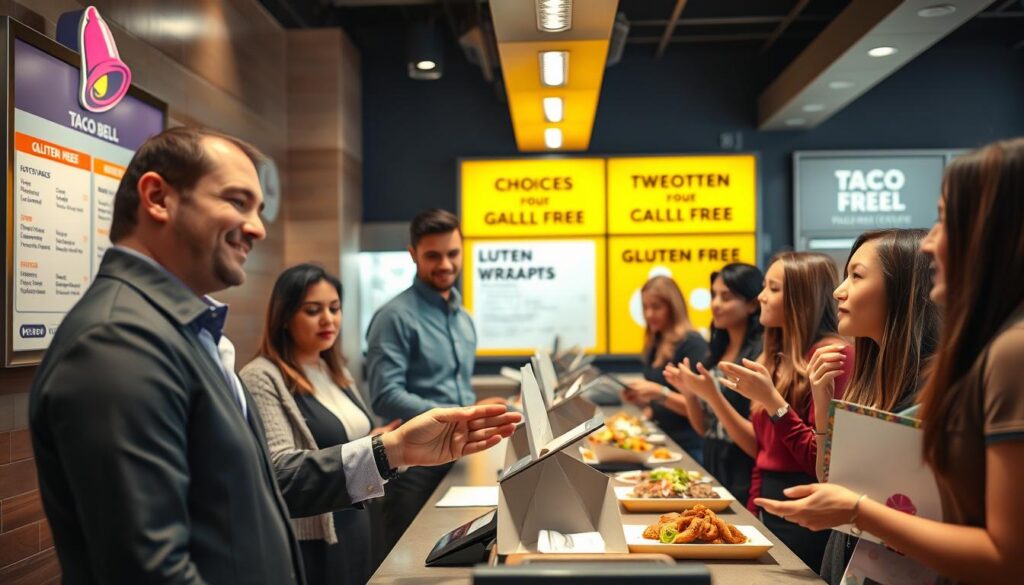
A clear ask at the counter often matters more than menu labels when avoiding cross-contact. Use short, direct requests so staff can act quickly during busy service.
Best ordering script: what to ask in the restaurant
Try this simple script when you order: “Hi, I avoid gluten. Can you change gloves, use a clean utensil, and keep my bowl away from flour tortillas?”
- Ask staff to assemble your bowl away from tortilla prep.
- Request sauce packets on the side to limit handling.
- Confirm the current menu build for each add-on.
Requesting glove changes and cleaner prep practices (what’s realistic)
Staff can change gloves and swap utensils, which lowers cross-contamination risk. Remember, this restaurant chain does not have dedicated stations, so requests reduce but do not remove risk.
Choosing items with fewer components to lower cross-contamination
Pick simple builds: a plain bowl, a basic crunchy corn taco, or rice and beans with grilled protein. Fewer items mean fewer touch points and less chance of shared-bin transfer.
| Action | Benefit | Limit |
|---|---|---|
| Change gloves | Less hand transfer | Not a guarantee |
| Separate assembly | Fewer airborne crumbs | Depends on crew |
| Limit sauces | Lower ingredient risk | Packets handled by staff |
Use the brand allergen guide before you go and re-check when limited-time menu items appear. This quick guide helps you decide if eating here matches your medical needs and comfort level.
Making the safest call for your body before you eat Taco Bell</h2>
For people with medical needs, a short checklist helps decide before ordering at this quick-service chain.
Celiac disease: highest risk. The brand does not claim a gluten-free menu and warns about shared prep and fryer use. If you have this disease, consider skipping the restaurant.
Wheat allergy: treat as an allergen concern. Use the online allergen tool and ask staff about tortilla handling and fryer sharing.
Non-celiac sensitivity: reduce risk by choosing simple bowls, avoiding fried items, and skipping creamy dressings. Ask for glove changes and separate assembly when possible.
Backup plan: take a packaged drink and eat elsewhere if staff cannot accommodate safe prep. Verify current ingredients online and remember that “made without” does not equal certified gluten-free.